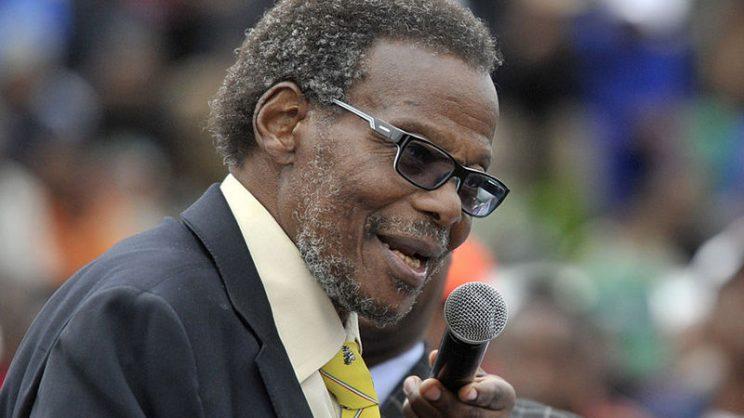
Celebrating people’s Prince, Mangosuthu Buthelezi, while still alive

Those who love him will do so until their last drop of blood and those who hate him do so with devastating malice. To many he is known and seen as an unashamedly Zulu traditionalist; others see him as an astute politician whose capabilities are boundless.

And there are those who believe he sold out in the struggle and should not be regarded as a freedom fighter but a sellout. Prince Mangosuthu Buthelezi was a member of the ANC Youth League before the formation of the Inkatha Freedom Party (IFP).

He often openly says the formation of the IFP was due to the blessings of the late ANC president Oliver Tambo. This has not been disputed by anyone in the ANC. Buthelezi’s politics is very complex. Political analyst Aubrey Matshiqi wrote in Business Day on May 22 2009: “Despite the acrimony between the ANC and Buthelezi, Nelson Mandela maintained a warm relation[ship] with Shenge [Buthelezi] from his Robben Island jail cell.

“Add to this confusing picture of the man the fact that he consistently called for Mandela to be released from jail and you begin to realise just how complex a political figure Shenge is.”

The deadly war between the IFP and ANC tilted the scales against Buthelezi and the IFP – the argument was often centred on whether he should be regarded as a freedom fighter or a sell-out. Many said he was a sellout and traditionalist whose politics was so primitive it relied on Zulu nationalism, based on tribalism. They said he was obsessed by the secessionism of the Zulu kingdom.

In the post-apartheid era Buthelezi has emerged as a leader whose politics evoke patriotism and he provided opposition that was patriotic.

But he has said often that he advocates non-violence and was against the sanctions which would have impoverished the already poor black majority. The ANC had campaigned for the apartheid state to be isolated economically through sanctions. However, in the democratic era the ANC government was against the sanctions imposed by the US and the UK in Zimbabwe.

Many ANC supporters propagated an anti-Shenge tirade and labelled him an apartheid apologist, a sell-out and murderer who should serve jail time for the many people who died in the people’s war between the ANC and IFP.

Shenge’s political longevity from apartheid to the democratic dispensation has never decreased his image as a politician – let alone the fading fortunes of his party. In the post-apartheid era Buthelezi has emerged as a leader whose politics evoke patriotism and he provided opposition that was patriotic.

His politics has always been forthright. He is known as the man who speaks the truth, a man of letters, a writer, an elder and international statesman. Very knowledgeable about the governance and administrative issues of state, he knows when to pounce.

At times when the ruling party shied away from its responsibility, Buthelezi would not shy away, voicing his disgust and rebuking those engaged in misdeeds. He would always remind the ANC of its 1994 pre-election promises. In 2007 former president Thabo Mbeki thanked the IFP leader for his patriotic engagements that brought sanity in Parliament without looking for easy victories.

Although his struggle credentials are always questioned, in the post-apartheid era he has remained a man of truth, he has spoken about corruption, and the degenerating societal fabric through acts of rape and poverty. He has often warned the ANC that unless it fights poverty, the country will run the risk of the masses being beggars who will remain indebted to the government without learning to fend for themselves.

He has urged the government to ponder over the social grants and high level of unemployment that lends itself to the current state of dependency, which could lead to a revolution by the masses against the state.

It is politically intriguing that as much as Shenge has people who dislike him and even wish that he should shed his mortal coil (as the cantankerous editor of this paper wishes), many like him and admire his truth and politics but cannot come out in the open because of fear of victimisation and rejection by the ANC and the public because of the stigma of black-on-black violence.

Why am I writing this you may ask? Am I singing the praises of the man?

The answer is no! I am writing this because in isiZulu we say: Umuntu ubongwa esaphila (loosely translated to we must acknowledge people while they are still alive).

Buthelezi is a formidable political figure whose politics are steeped in traditional perspective and political acumen.

Therefore, he cannot be ignored. Matshiqi concluded that the South African history pre- and post-democracy cannot be complete without Buthelezi.

As he celebrates his 90th birthday tomorrow, it’s time for those who love him to raise a glass and say an Ode to the people’s prince.

As it is often said: sing my praises while I am still alive so that I can hear them because when I am dead, I will not care anyway.

Long Live.

Authored by: Muntonezwi Khanyile

Milestone bash for Mangosuthu Buthelezi planned

Preparations are underway to celebrate Prince Mangosuthu Buthelezi’s milestone 90th birthday. The Buthelezi legacy celebration committee said Buthelezi was “embarrassed” when they informed him of the celebrations.

The committee is responsible for the preparations of a series of events to celebrate Buthelezi’s life as the founder and long-time leader of the IFP, who turns 90 on August 27.

The committee said the celebrations would kick off with a thanksgiving service at the Durban Exhibition Centre on August 19, an Umgidi (celebration party) at the Ulundi Regional Sports Complex on August 27, ending with an invitation-only banquet at the Inkosi Albert Luthuli International Convention Centre (ICC) on August 31.

Addressing the media in Durban yesterday, Prince Zuzile Buthelezi, who is chairperson of the Buthelezi legacy celebration committee and Buthelezi’s son, said his father’s milestone of reaching 90 years of age was worth celebrating and to thank God for his long life and all that he had accomplished.


“Everyone who works with him, his colleagues know he still puts in a full day at the office well into the evening, sleeps beyond midnight and wakes up in the morning, which is God’s blessing.

He said they felt obliged to tell Buthelezi of their plans, because had they not he might have “pulled the carpet from under our feet when we were more than halfway, if we did not warn him of our plans”.

His son said they had planned the events well in advance, because they would be inviting people from all over the country, the continent and several parts of the world with whom Buthelezi has enjoyed long-lasting friendships.

“Everyone who works with him, his colleagues know he still puts in a full day at the office well into the evening, sleeps beyond midnight and wakes up in the morning, which is God’s blessing.

“When you turn 90, it’s time to stop and reflect and look back, and we just thought that in all those years as a family, we have never stood up and thanked him because the first thing for us is his role as a family man and as a husband to our mother,” said Buthelezi.

He added that they were also honouring their father on behalf of their five late siblings and Buthelezi’s mother Princess Magogo KaDinuzulu, who “had a big influence on his life”.

Buthelezi’s daughter Princess Angela Buthelezi said the biggest lessons she had learnt from her father were humility, to be God-fearing and independent, “especially as females”.

Courtesy: Daily News, Picture: Tumi Pakkies

Prince Buthelezi defends Michael Caine film Zulu in racism battle

Prince Mangosuthu Buthelezi, who played his forebear, dismissed those in Kent who tried to ban the film The Prime Minister of the Zulu nation who appeared alongside Michael Caine in the 1964 epic film of the Battle of Rorke’s Drift has risen to defend the film’s cultural and historical merits after it was denounced as “inaccurate, distorted and racist”. Critics of the film, which is based on a ferocious battle from the Anglo-Zulu War in January 1879, called for it to be dropped at a fundraising event in Folkestone, citing risks that it “could have a negative effect on relationships within the changing and richly diverse communities” of the town in Kent. Although the screening went ahead after an acrimonious debate during which the film’s fans deried the would-be censors as “snowflakes”, organisers reported a poor turnout and low takings for armed forces…

Courtesy: The Times UK

Launch of Prince Mangosuthu Buthelezi Preservation Legacy Project

The KwaZulu-Natal Department of Arts and Culture has partnered with the Prince Mangosuthu Buthelezi Museum and Documentation Centre (PMBMDC) to launch the Preservation Legacy Project. The initiative aims to assist the PMBMDC to source and adequately preserve Dr Mangosuthu Buthelezi’s written work, artefacts and personal archives. The project launch will take place in Ulundi on 27 August 2017, which coincides with Dr. Buthelezi’s birthday.

The Preservation Legacy Project will be rolled out in phases which include assessing Dr Buthelezi’s personal archives, compiling joint recommendations, interviewing Dr Buthelezi and possible publication of the archives.

As per its mandate, the department has been tasked with providing support to museums across the province. The department also manages a collection center which houses thousands of artifacts which must be kept in accordance with specialized norms and standards.

Date: 27 August 2017
Time: 10h00
Venue: Garden Court Hotel, Ulundi

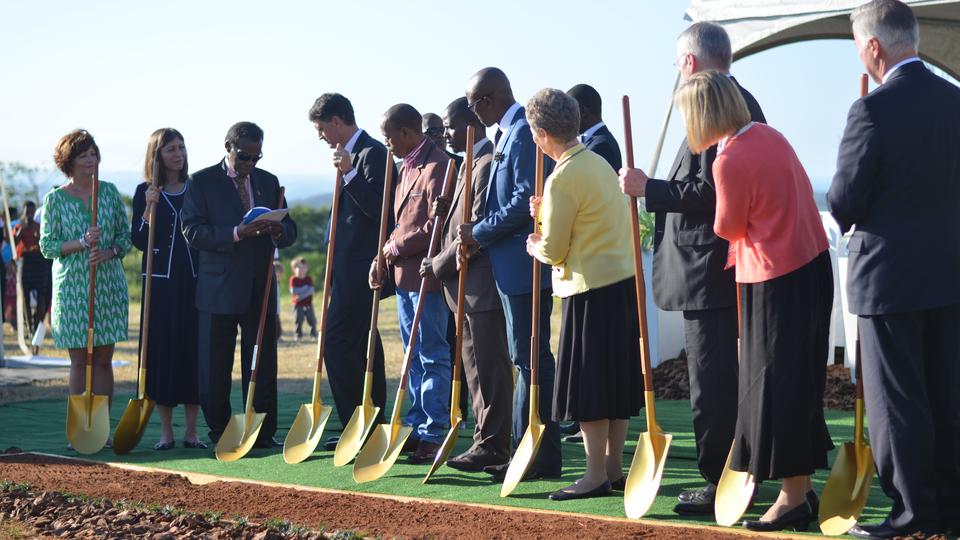
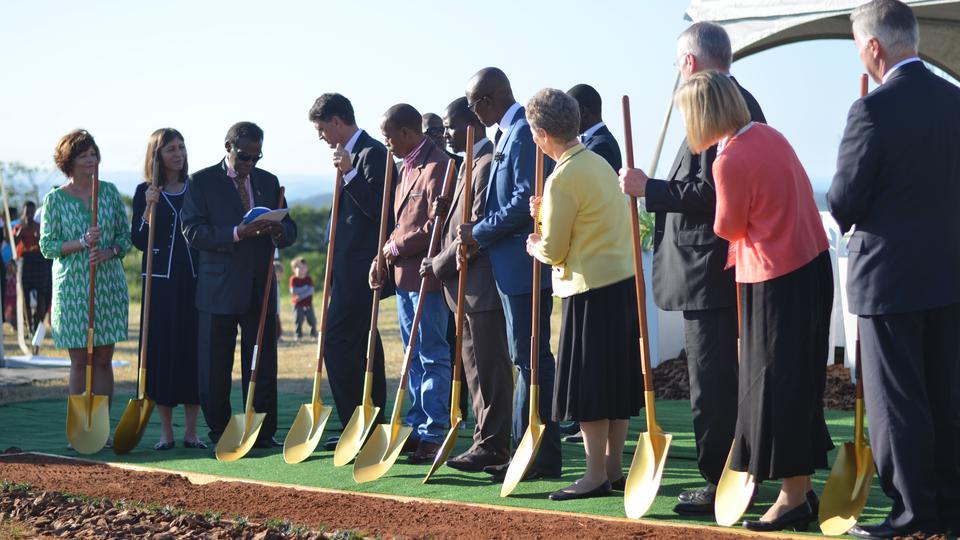
Prince Mangosuthu Buthelezi’s Speech at Durban Temple Groundbreaking

I extend my gratitude to the leaders of the Church of Jesus Christ of Latter-day Saints for inviting me to witness this afternoon’s groundbreaking ceremony.

You are indeed breaking new ground, for this will be the second temple built in South Africa, following the first in Johannesburg, which was the first on the African continent. We therefore have reason to mark this significant moment as we celebrate the beginning of construction.

I look forward to seeing this temple, for I know that throughout the world the temples of the Latter-day Saints are magnificently designed and beautifully constructed. Visually, they convey the idea that this is a sacred place.

The presence of this temple will prompt those outside the Church to ask questions about their faith in what they believe. For those inside the Church it will provide a place where marriages and families can be sealed, baptisms conducted, and knowledge expanded. It will be a reminder to all to be mindful of the kind of life we are leading.

I appreciate the emphasis on marriage and family through the doctrine of the Latter-day Saints. I married my wife, Princess Irene, in July 1952, and we have remained committed to one another for almost 64 years. The Lord blessed our marriage with eight children, and I am a proud grandfather to many grandchildren. I know what it is to be family-focused.

I also know what it means to lose family members, for my wife and I have buried five of our children who preceded us into eternity. We take great solace in believing that this separation is temporary, and we look forward to being reunited with our children in the presence of the Lord.

This life, undoubtedly, is a testing experience. When I consider the hardship, trials and battles I have endured throughout more than sixty years in leadership and public life, I find it difficult to agree with the hedonists that the primary purpose of life is pleasure. I have had many moments of joy, and I consider myself happy. But I know that my happiness is a gift from God, for only He could bring me through the life I have lived with a smile on my face!

Nevertheless, I would do it again. It was all well worth it. This, I think, is a sentiment that all believers have the satisfaction of expressing, for we live not according to our own dictates, but according to the leading of the Lord. This has allowed me to have no regrets, for, faced with difficult choices, I have simply done what moral conscience dictated.

I know that this too is a central tenet of the Church of Jesus Christ of Latter-day Saints: to live a morally upright, ethical life, faithful to one’s spouse and family. It is admirable that so many young members of this Church are called into fulltime mission work and spend a considerable amount of time as missionaries at a young age.

There are so many temptations for our youth to follow, and they are so quickly led astray into greed, substance abuse, criminal behaviour, and damaging relationships. By focusing young people on mission work first, before they embark on their own careers, they are being taught the principle of seeking first the Kingdom of God. In this way they will be better equipped to face temptations, and turn away.

We need to give our youth an alternative to despair and destruction. These are very difficult times in South Africa, in which widespread unemployment, poverty and hardship are taking a toll on human dignity. Young people are looking for something they can believe in, for someone to follow. They want to believe that they can create change with their own actions.

This is the promise of democracy: that every individual has a voice and that every voice has significance. Throughout this weekend I am going from community to community encouraging people to register to vote in the coming Local Government Elections. This is about protecting democracy and seeing its promises fulfilled.

In this final Voter Registration weekend, the Electoral Commission has set up stations across South Africa to enable you to register, to check whether you are on the voters’ roll, to see where you will vote on election day, and to record any change of address.

As patriots who believe in doing the right thing for our families and our country, we who are present at this ground-breaking must surely involve ourselves in securing good governance. I have never considered my Christianity separate from my work in politics. I am a Christian who believes in serving my country. As I walk this road, it is good to spend time with fellow believers and to share celebrations like this.

I wish you well as you build the Durban temple, in the hope that the principles of moral living, commitment and family values will deepen in South Africa.

Delegation of The Church Of Jesus Christ Meets Prince Mangosuthu Buthelezi

Edith O’Friel Had Always Dreamt of Meeting Prince Mangosuthu Buthelezi. At the ground breaking of the Durban Temple of The Church Of Jesus Christ of Latter-day Saints, Edith was able to fulfill that dream.

Edith has followed his life and great accomplishments with interest, and was able to meet him at the VIP event held previous to the ground breaking.

As an honoured guest, Prince Buthelezi delivered a speech. His interest in the family was at the center of his comments, “I appreciate the emphasis on marriage and family through the doctrine of the Latter-day Saints. I married my wife, Princess Irene, in July 1952, and we have remained committed to one another for almost 64 years. The Lord blessed our marriage with eight children, and I am a proud grandfather to many grandchildren. I know what it is to be family-focused.”

TRIBUTE TO OUR FIRST DEMOCRATICALLY ELECTED PRESIDENT NELSON ROLIHLAHLA MANDELA

SPEECH BY PRINCE MANGOSUTHU BUTHELEZI MP, PRESIDENT OF THE INKATHA FREEDOM PARTY, TO THE JOINT SITTING OF PARLIAMENT

Today a nation mourns. The passing of Nelson Rohlihlahla Mandela closes a chapter in history that will be remembered as a time of struggle, of freedom and of great transformation. Yet this chapter was only the preface, pointing towards the story that is yet to come.

As we continue to write the story of South Africa, let us be inspired by Mandela’s legacy.Let us remember his passion for reconciliation, his capacity for forgiveness and his bold leadership. Let us also remember his honesty.

Mandela’s old-style honesty was a value that my generation admired. I respected him for an admission he made in April 2002. He said, “We have used every ammunition to destroy [Buthelezi] and we failed. He is still there. He is a formidable survivor. We cannot ignore him.”

That admission made many in his organisation unhappy. But that was the kind of brutal frankness that positioned Mandela as a leader among his peers.

Even as a Head of State, his honesty drove him to make admissions that few others at the helm of their country would dare. On 1 June 1995, President Mandela spoke in the National Assembly about the Shell House Massacre of 28 March 1994, in which eight civilians died when security at the ANC’s Headquarters opened fire.

In total, 60 lives were lost and 300 were injured. A year later, in the National Assembly, Mandela said, “‘I gave instructions to our security that if they attacked the house, please you must protect that house – even if you have to kill people.”

This admission that he himself had given the order distressed Mandela’s comrades. But six days later he stood again in the National Assembly and reminded us all, “For reconciliation to have real meaning, the truth should be brought to light.”

As painful as it was for me to hear, President Mandela’s honesty about Shell House enhanced my admiration for him. He was a man of truth.

I know that many still carry the wound of Shell House, and the multitude of wounds inflicted by the ANC’s People’s War. I too carry scars in my heart. But there is a saying that has defined my life, and one that Mandela used to repeat as well: “The definition of a saint is a sinner who dies trying”.

There is no one more deserving of forgiveness than Nelson Mandela, and few who epitomise forgiveness more.Now that the Lord has called him home, I urge those who carry wounds, to forgive him. It is true, after all, that Errarehumanumest.

Following the rupture between Inkatha and the ANC in 1979, I endured vilification and pain. But even at the height of the campaign to destroy me, Mandela himself showed integrity.

In 1986 the Commonwealth Eminent Persons Group visited South Africa to assess the situation under apartheid, and met with Mandela on Robben Island. General OlusegunObasanjo, the former Head of State of Nigeria, later recounted to me that they asked Mandela who I was, because they were hearing so much about me. Mandela answered, “Buthelezi is a freedom fighter in his own right.”

This was an expression of honesty as much as an expression of our friendship, which endured for as long I knew him. He expressed his confidence in me time and again as we served in a democratic Government, appointing me as Acting President in his absence. He was not obliged to do that.

My only regret, as we prepare to inter the remains of our beloved Madiba, is that his long-pursued vision of reconciliation is not complete. He charged those who came after him to take up the cause of reconciliation. Yet he enters eternity with this dream still unachieved.

The dishonoured agreement of 19 April 1994, signed by Mandela, de Klerk and myself, still haunts our efforts. There is an echo in the dishonoured agreement of 30 November 2000 which promised to uphold the powers and functions of traditional leaders. This had nothing to do with Mandela. But it forces us to consider whether we as a nation maintain the integrity of our first democratic leader.

In the twilight of his life, the need for reconciliation still weighed heavily on Mandela’s heart, as it does on mine. Unfortunately, he was prevented time and time again from acting on his convictions. He was a remarkable leader, but not a sovereign, and few within the leadership of the ANC shared his commitment to reconcile with past opponents.

Yet we cannot honour Madiba’s legacy without taking up his passion and adopting his mission. The liberation he fought for must encompass freedom from the wounds of the past, committed not only by minority against majority, but by brother against brother.

In memory of Nelson Mandela, I pray that that is where our story will lead.

As a starting point, in honour of our fallen hero, may consideration be given to releasing the political prisoners who still await their freedom twenty years on.

My condolences to the Mandela family, and to the many who grieve. May Nelson Mandela rest in peace.

Mandela and I

by Prince Mangosuthu Buthelezi

Dear friends and fellow South Africans,

On the 18th of July 1978, Nelson Mandela spent his 60th birthday on Robben Island. In celebration of the man whom the London Times called “the colossus of African nationalism”, Mr Walter Sisulu and Mr Ahmed Kathrada delivered speeches, while governments and individuals across the world sent messages of support. These messages were addressed to Mrs Winnie Madikizela Mandela, who also gave an interview to the New York Times.

Mandela himself received only eight messages from family and friends. One of those messages was from me, and Mandela responded warmly. We had maintained a friendship that began in the fifties, when I discovered that Mandela was close to my father-in-law, Zachariah Mzila. Whenever Mandela visited him at the Eloff Street compound where he worked, Mr Mzila’s daughter, Irene Thandekile Mzila, would serve him tea and become the target of his gentle teasing.

I was in Durban at that time, completing my studies at the non-European section of the University of Natal, and I attended meetings of the ANC in Nichols Square, together with people like Tambo, Sisulu, Luthuli, Monty Naicker, Yengwa and Mandela. My political activism at the University of Fort Hare, where I had belonged to the ANC Youth League, had seen me rusticated from that institution. Mandela himself, who was a founding member of the Youth League, had been expelled from Fort Hare before I arrived.

When my father-in-law passed away, I asked Mandela to wind up his estate, as a lawyer and family friend.

Following the Rivonia Trial and Mandela’s incarceration, we continued to correspond. Some of Mandela’s letters had to be smuggled out by his visitors. At other times, he wrote to me through my wife, Princess Irene. There are two letters that I remember well. The first is his letter of condolence upon the passing King Cyprian Bhekuzulu ka Solomon. As the King’s traditional Prime Minister, confidante and cousin, I was pained by his death in 1968.

The second letter that stands out in my mind was written just before his release, in which he laments the violence between our organisations and urges that we meet immediately upon his release. I agreed wholeheartedly, knowing that the message of reconciliation needed to filter down to the grassroots from the top.

My advocacy of non-violence, which I maintained throughout the ANC’s People’s War, had caused a schism between Inkatha and the ANC’s mission-in-exile, when I refused to engage the armed struggle. I had been vilified for my stand, but I remained the champion of non-violence. I therefore welcomed Mandela’s eagerness to end the bloodshed.

I regret, however, that a year passed before Mandela and I met, due to pressure he received from some ANC leaders. When traditional leaders in the Eastern Cape asked Mandela why we had not yet met, considering our well-known friendship, he admitted that ANC leaders from KwaZulu Natal had “almost throttled” him.

But Mandela remained clear on his intention to stop the violence. On the 25th of February 1990, Nelson Mandela addressed thousands of supporters at King’s Park Stadium in Durban and said, “Take your guns, your knives and your pangas, and throw them into the sea.” It was a message that many ANC supporters were loath to hear. But it was a call to return to the path of non-violence on which the liberation movement was founded.

When we did meet, on the 29th of January 1991, Mandela and I issued a joint statement committing ourselves to sharing a podium at joint rallies, to bring ANC and IFP supporters together and begin the process of reconciliation. Unfortunately, due to pressure from ANC leaders, again Mandela could not fulfil that commitment.

Based on the interim Constitution, a Government of National Unity was formed after the April 1994 elections, and President Mandela appointed me as Minister of Home Affairs. Whenever both he and Deputy President Mbeki were out of the country, President Mandela appointed me as Acting President of the Republic. I filled this position 22 times, and Mandela often jokingly referred to me as “Mr Acting President”.

In 2004, when my son, Prince Nelisuzulu Benedict, passed away, I took the unprecedented step of acknowledging in public that my son had succumbed to HIV/Aids. Shortly thereafter, Mandela’s own grandson died and he emerged with enough courage to say that HIV/Aids had claimed another life. No other leader had spoken so forthrightly about Aids. Not only did Aids carry a stigma, our culture did not allow us to talk about matters of sex.

But Mandela and I sought to de-stigmatise HIV/Aids so that more people would be tested, seek treatment and be willing to disclose their status to prospective partners. We gave the leadership in this fight, and I believe we saved lives.

For me, there is one pivotal moment in which Mandela’s integrity was displayed. This was in 2002, when he publically admitted, “We have used every ammunition to destroy (Buthelezi), but we failed. And he is still there. He is a formidable survivor. We cannot ignore him.”

The ANC has tried for years to remove me from the political landscape. President Zuma himself advised me, face to face, to step out of leadership. But only Mandela has had the integrity to admit that the ANC wants to “destroy” me. I am sure that if anyone knows what it is like to be on the receiving end of so much antipathy, it is Nelson Mandela.

But Mandela also knows, more than anyone else, what it is like to be loved as an international icon. As we all get caught up in the spirit of Mandela Day, I hope that the lessons of peace and integrity truly create change.

Yours in the service of our nation,

Prince Mangosuthu Buthelezi MP


Prince Mangosuthu Buthelezi and Harry Oppenheimer Trust was founded with the view of giving recognition to two of the most influential South African icons of our time as well as some of their most ground-breaking initiatives that will mould some of South Africa's future leaders.
FIND US AT
  • No.2 Durban Club Place, Durban, KwaZulu-Natal, South Africa
  • +27-31-303-3366
  • info@pmbhotrust.co.za
Privacy Settings
We use cookies to enhance your experience while using our website. If you are using our Services via a browser you can restrict, block or remove cookies through your web browser settings. We also use content and scripts from third parties that may use tracking technologies. You can selectively provide your consent below to allow such third party embeds. For complete information about the cookies we use, data we collect and how we process them, please check our Privacy Policy
Youtube
Consent to display content from Youtube
Vimeo
Consent to display content from Vimeo
Google Maps
Consent to display content from Google